
Managed DNS services for production continuity.
Web Envy DNS delivers the operational layer behind always-on websites, customer portals, ecommerce, APIs, mail routing, and multi-site infrastructure.
Everything needed to keep DNS resilient.
Use Web Envy DNS as a managed backup provider, a failover automation layer, or a policy-based routing platform for global application access. Services can be adopted individually or combined into a continuity plan for critical domains.
Managed DNS Backup
Independent authoritative DNS with synchronized records, redundant nodes, and hands-on configuration support.
Failover DNS
Health checks, thresholds, alternate targets, and controlled rollback for production websites and services.
Geo Multi-Site DNS
Route traffic to the closest, fastest, or preferred environment across cloud and private infrastructure.
REST API Management
Automate record changes and integrate DNS operations with deployment, monitoring, and incident workflows.
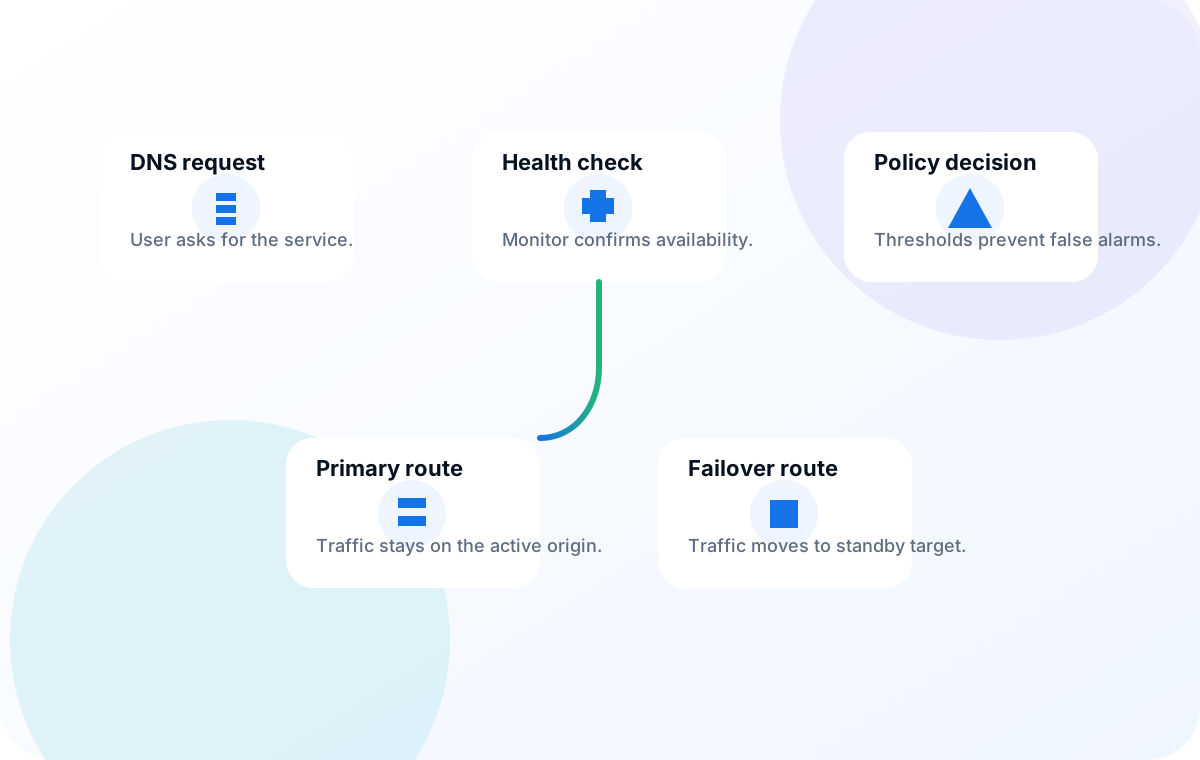
From DNS risk to operational resilience.
The service is designed around the practical work customers need to complete: mirror records, validate endpoints, define recovery targets, route traffic, and keep support context close when incidents happen.
- Document the current DNS footprint and identify single-provider exposure.
- Configure backup zones and keep critical record types synchronized.
- Build failover policies for web, mail, API, and application endpoints.
- Review routing state before, during, and after maintenance windows.
Designed around the scenarios that create real business risk.
Enterprise buyers want to know whether a service fits their incident model. These common playbooks show where Web Envy DNS can sit in the operating environment.
Primary DNS provider becomes unavailable.
Maintain an independent authoritative layer with synchronized records so DNS responses can continue while the primary provider is impaired or under maintenance.
Primary origin stops serving production traffic.
Use health checks, failure thresholds, and backup targets to move users toward a healthy endpoint without waiting for manual DNS edits.
Customers should reach the right site by location.
Route users by geography or preferred region to support performance, resilience, active/active environments, or local infrastructure strategy.
Traffic needs a clean path during upgrades.
Prepare standby targets and rollback rules before maintenance so customer access remains predictable while teams patch, migrate, or replace infrastructure.
Domains move between clouds, hosts, or providers.
Control TTL strategy, mirror records, validate endpoint health, and use DNS policy to lower migration risk across important domains.
DNS changes must fit engineering workflows.
Use API-ready controls and structured tickets to connect DNS work to release processes, support escalations, and incident response.
From setup to escalation, services are designed around real operations.
Each engagement can include the practical artifacts teams need: record review, failover policy design, monitoring configuration, API guidance, and technical support for production incidents.
DNS footprint audit
Review authoritative providers, active zones, critical records, TTL values, domain ownership, and service dependencies.
Continuity design
Define backup DNS behavior, health checks, failover thresholds, standby targets, and rollback posture before changes go live.
Validation and launch
Confirm records resolve correctly, monitors detect the right failures, and routing policy behaves as expected under test conditions.
Escalation workflow
Document contacts, service priority, affected domains, and the ticket path support should follow when production DNS needs attention.
Match the service to the way your infrastructure actually runs.
Not every domain needs the same DNS posture. Web Envy DNS can support simple backup DNS, standby recovery, global routing, and more advanced multi-site patterns.
Pick the coverage level that fits your footprint.
Plans can support everything from straightforward backup DNS to enterprise multi-site routing with stronger support expectations.
| Plan | Best for | Includes |
|---|---|---|
| Business | Small teams reducing DNS provider risk | 5 global node choices, failover support, up to 50 NS records, REST API access, basic continuity guidance |
| Business Plus | Growing operations with more records and priority needs | Global node selection, SLA coverage, priority support, up to 150 NS records, implementation guidance |
| Enterprise | Critical domains and multi-site applications | Worldcast DNS network, rapid failover protection, load balancing support, comprehensive support, multi-site routing strategy |